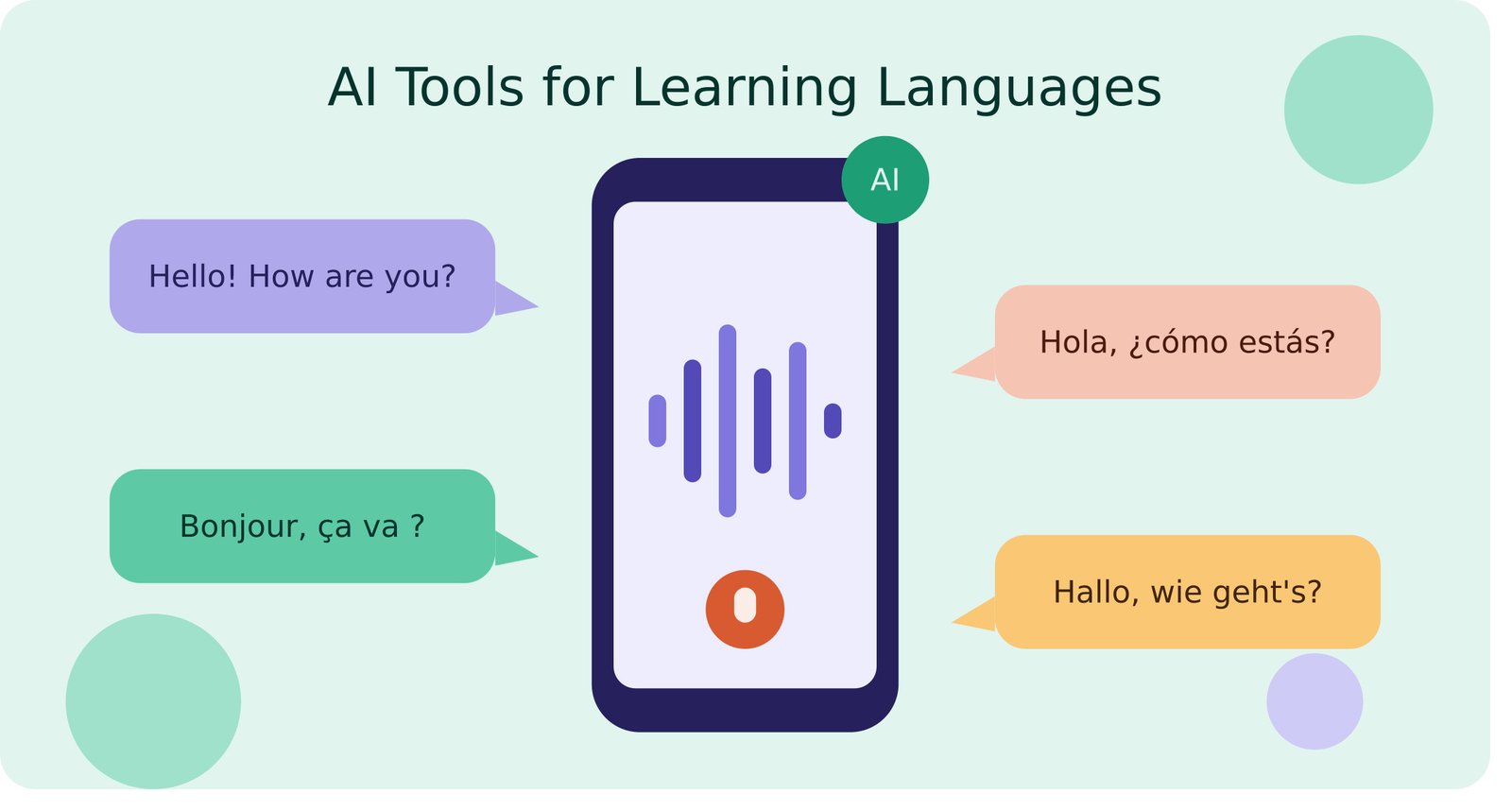
A few years ago, if you wanted to practice speaking English at midnight, you had two choices: talk to yourself or wait until morning. Today, you can open your phone and start a real conversation in seconds. That is the power of AI tools for learning languages, and it is changing how millions of people study.
Whether you want to learn English with AI for a job interview or pick up Spanish before a trip, the right tools can save you months of effort. But there are hundreds of options, and not all are worth your time. In this guide, I will share what works, what to watch out for, and how to start today, even if you are a complete beginner.
Why AI Language Learning Is Growing So Fast
Traditional classes are wonderful, but they can be expensive, fixed-schedule, and crowded. In a class of 30 students, you may speak for only a few minutes. AI-powered language learning fills these gaps:
- Available 24/7: practice at any hour, on any device.
- Judgment-free: you can make mistakes without feeling shy.
- Personalized language learning: lessons match your level and goals.
- Real-time feedback: you get corrections while you speak or write.
- Affordable: many tools offer a free plan to begin with.
Behind the scenes, most of these tools use adaptive learning. The app notices which words or rules you keep getting wrong and shows them to you more often. It is like a teacher who remembers every mistake you ever made.
The Main Types of AI Language Learning Tools
Not every tool does the same job. Understanding the categories helps you build a simple, effective toolkit.
AI Chatbots for Language Practice
An AI chatbot for language practice, such as ChatGPT or Google Gemini, lets you chat about anything. You can ask it to play a shopkeeper, explain a grammar rule in simple words, or correct your paragraph. It works like an AI language tutor that never gets tired or impatient.
Conversational AI for Speaking Practice
Speaking is the hardest skill for most learners. Conversational AI for speaking practice gives you a safe place to talk. Apps like Speak and Duolingo Max let you hold voice conversations, then show you what to improve. This is excellent AI English speaking practice, and it gives you a taste of language immersion without leaving home.
Pronunciation Feedback and Speech Recognition
Tools like ELSA Speak use speech recognition to listen to your voice and highlight which sounds need work. This kind of pronunciation feedback is hard to get from books. It is especially helpful for sounds that do not exist in your first language.
Vocabulary Builder Apps
A good vocabulary builder app uses spaced repetition, which means it reviews each word just before you are likely to forget it. Memrise and Anki are popular choices, and many now use AI to create example sentences and memory tricks.
Grammar Checkers and Machine Translation
A grammar checker like Grammarly or LanguageTool catches mistakes in your writing and explains why they are wrong. Machine translation tools like DeepL and Google Translate help you understand new text quickly. Use translation to understand, not to avoid thinking. Try writing first, then check.
Best AI Tools for Learning English: Quick Comparison
Here is a simple table to help you choose among popular AI language learning apps:
| Tool | Best For | Key Feature | Free Option |
|---|---|---|---|
| ChatGPT / Gemini | Conversation and explanations | Flexible role-play and corrections | Yes (limited) |
| Duolingo (Max) | Beginners and daily habits | Gamified lessons plus AI role-play | Free tier; Max is paid |
| Speak | Spoken English practice | Voice-based AI tutor | Limited |
| ELSA Speak | Pronunciation | Speech recognition feedback | Limited |
| Grammarly | Writing | Grammar checker with suggestions | Yes (basic) |
| Busuu | Structured courses | Lessons plus community feedback | Limited |
Features and pricing change often, so always check each official website before subscribing.
If you want free AI tools for language learning, start with a chatbot, the free tier of Duolingo, and the basic version of Grammarly. That combination already covers speaking, vocabulary, and writing.
Pros and Cons of AI-Powered Language Learning
Pros
- Instant feedback on speaking and writing
- Flexible schedule, perfect for busy people
- Lower cost than private tutoring
- Lessons that adapt to your pace
- Low pressure, which builds confidence
Cons
- AI can sometimes give wrong or unnatural answers
- It may miss cultural context and humor
- Some apps push you toward expensive subscriptions
- It cannot fully replace real human conversation
- Too much translation can slow your progress
The smart approach is to enjoy the pros and protect yourself from the cons by adding human practice now and then.
How to Start: A Beginner-Friendly Plan
Follow these simple steps to learn English with AI, or any other language:
- Set one clear goal. For example: “I want to speak confidently in meetings in three months.”
- Pick only two or three tools. One chatbot, one speaking app, and one vocabulary builder are plenty.
- Study 20 minutes a day. Short, regular sessions beat long, rare ones.
- Speak out loud. Do not only read. Your mouth needs practice too.
- Review mistakes weekly. Write down your top five errors and fix them one by one.
- Add a human. Chat with a friend, join a speaking club, or book an online language tutor once a month.
Practical Tips and a Real Example
The quality of your prompt decides the quality of your practice. Here is a simple prompt you can copy:
“Act as my English tutor. I am a beginner. Chat with me about my day in short sentences. After each reply, show my mistakes in a small list and give the corrected sentence.”
A few more habits that work well:
- Ask for a level. Say “use simple A2 English” so the answers are not too difficult.
- Record yourself. Listen again after a week to hear your own progress.
- Use role-play. Practice real situations like ordering food, job interviews, or phone calls.
- Double-check important rules. If something looks strange, confirm it in a trusted dictionary or grammar book.
2026 Trends: Finding Trustworthy Learning Help Online
The way we search for learning advice is changing too. Google now often shows AI Overviews at the top of results, which creates many zero-click searches, where people get a quick answer and never open a website. That is convenient, but it can be shallow.
For learners, this means a few things:
- Click deeper for important decisions. An AI summary will not tell you whether an app felt frustrating or helpful over months of use.
- Look for E-E-A-T. Trust content that shows real experience, expertise, authority, and trustworthiness, such as honest reviews written by real teachers and learners.
- Human-written content matters. Articles with real opinions, examples, and care are more useful than generic text.
- GEO is rising. Generative Engine Optimization means websites are now structured so that AI answer engines can understand and cite them. Clear headings and honest facts help both readers and machines.
- UX is part of quality. Choose apps that are easy to use, with clean design and few annoying ads. A tool you enjoy opening is a tool you will actually use.
Frequently Asked Questions (FAQs)
1. What are AI tools for learning languages? They are apps and chatbots that use artificial intelligence to teach vocabulary, grammar, speaking, and listening, often with personalized lessons.
2. Can I really learn English with AI? Yes, especially for daily practice, speaking confidence, and instant feedback. For best results, combine AI with real conversations.
3. What are the best AI tools for learning English? Popular choices include ChatGPT, Gemini, Duolingo, Speak, ELSA Speak, Grammarly, and Busuu. The best one depends on your goal.
4. Are there free AI tools for language learning? Yes. Many chatbots and language learning apps have free tiers. They are enough to start, though some advanced features need a subscription.
5. Is an AI language tutor better than a human tutor? Not exactly. AI is cheaper and always available, while a human tutor understands culture, emotion, and your personal struggles better. Using both is ideal.
6. How does AI help with pronunciation? Speech recognition listens to your voice, compares it with native-like sounds, and shows which words or sounds to improve.
7. How much time should I practice each day? About 20 to 30 minutes of focused practice is a great start. Consistency matters more than length.
8. Can AI make mistakes when teaching? Sometimes, yes. It may give unnatural phrases or incorrect explanations. Verify important points with trusted sources.
9. Is machine translation good for learning? It helps you understand text quickly, but relying on it too much can slow your progress. Try to write in the target language first.
10. Can I learn other languages like Spanish or French with AI? Absolutely. Most AI language learning apps support many languages, including Spanish, French, German, and more.